YouTube analysis
With Tania Louis, Pierre Masselot, and Tobias Fuschlin, I analyzed in 2018 more than 600 French-language science communication channels and 70,000 videos, and complemented this analysis with a survey of 180 YouTubers. Our results were published in Frontiers in Communication (open access, click the link to get the pdf):
Debove, S., Füchslin, T., Louis, T., & Masselot, P. (2021). French Science Communication on YouTube: A Survey of Individual and Institutional Communicators and Their Channel Characteristics. Frontiers in Communication, 6, 9.
For those who prefer, we also made a video version of our article (not simplified; it is truly a video version of the written article):
One major interest of our article is that we worked on a much more representative sample than previous studies. Existing YouTube studies focus mainly on the largest channels with small samples. Our sample is entirely francophone but includes channels ranging from 1,000 to 1 million subscribers, analyzed both objectively (public YouTube data) and subjectively (survey). Our definition of “science” is broad (even includes geology).
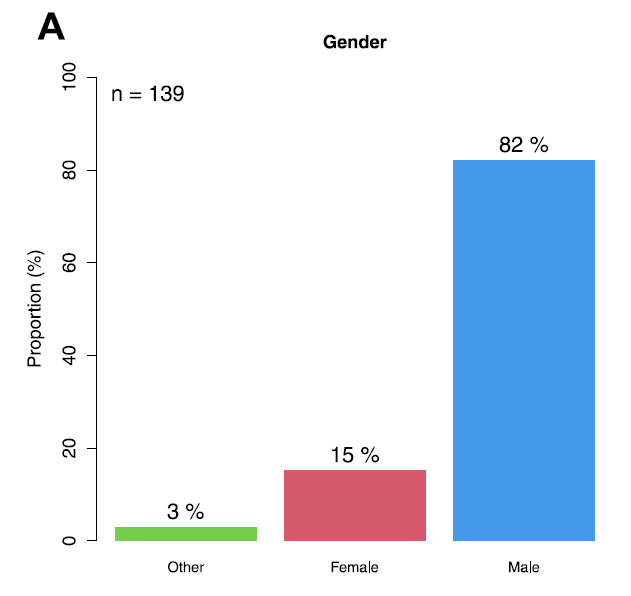
For the results: regarding demographics, we confirm what you likely already know if you watch science content on YouTube: communicators are young and predominantly male.
More interestingly, the audience of science communicators has exactly the same profile: young and male. Several possible interpretations are discussed in the article.
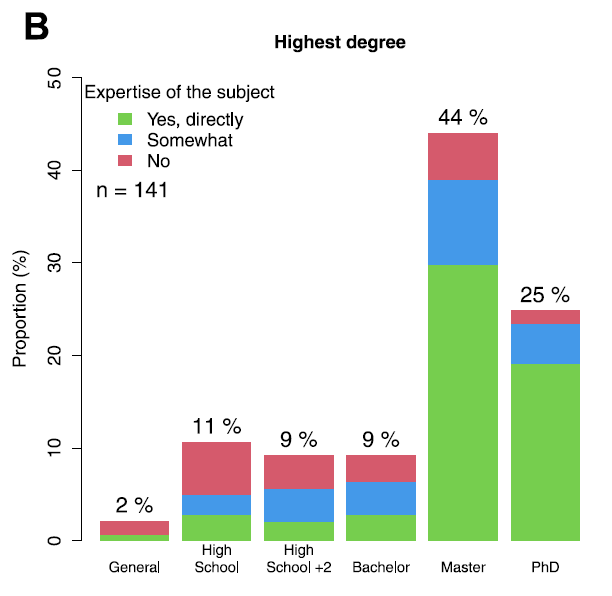
Science communicators are highly educated: 25% hold a PhD in our sample, and 44% have a master’s degree, figures well above the national average. Communicators often limit themselves to communicating within their area of expertise.
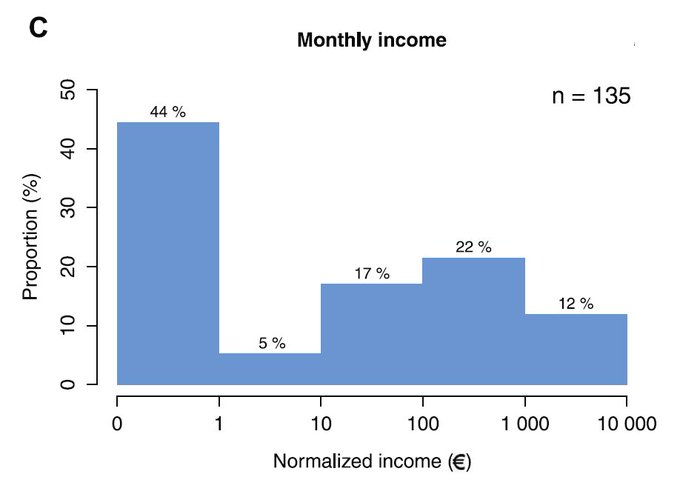
Regarding income, creators struggle: only 33% have managed to earn more money than they spent since starting their channel. Only 12% earn more than €1,000/month, and 44% earn nothing at all.
Among those who do not live off their channel, 38% do not wish to, and 19% just want to break even. This illustrates the “side project” nature, whether voluntary or imposed, confirmed by employment status: over half are salaried.
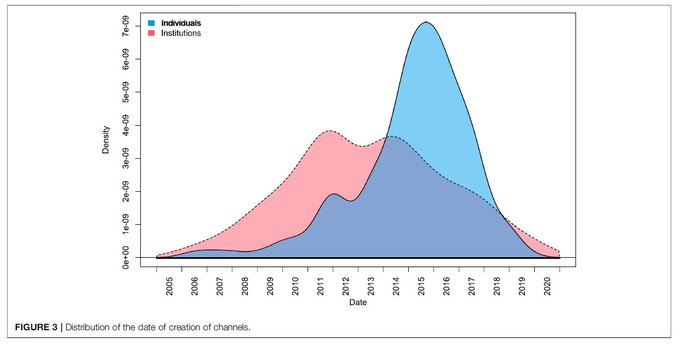
Contrary to what one might think, institutional channels (universities, museums, institutes…) were generally created before individual channels. Very few channels have been created in recent years; the peak seems to have passed.
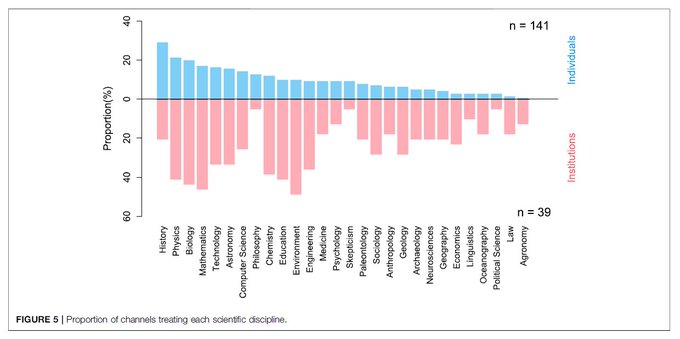
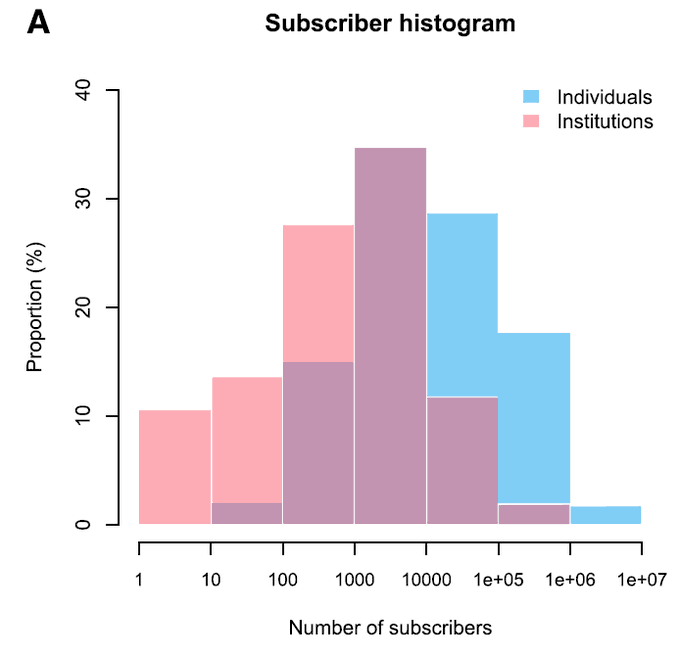
One focus of our research is precisely the comparison between individual and institutional channels. Some notable differences appear, such as the number of different fields covered (although all fields are covered by both types).
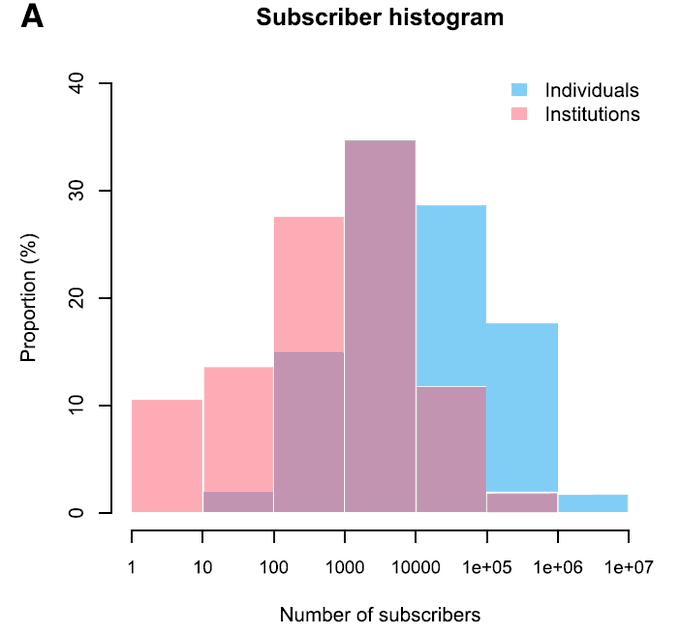
And of course, regarding popularity: no institutional science channel has yet reached 1 million subscribers.
We also discuss success indicators (like/view ratio), YouTube meritocracy, the relationship between views and subscribers, and the training of communicators.
This is a descriptive and exploratory article, a first step before conducting more in-depth inferential analyses.